


Key Takeaways
- Follow Audi's recommended maintenance schedule to improve reliability, protect resale value and help prevent costly repairs.
- Minor and major services include different maintenance items, so understanding your service schedule helps you plan ahead.
- Many common Audi issues can be identified early through routine servicing before they develop into major repairs.
- You don't have to use an authorised Audi dealership to maintain your warranty, provided servicing follows the manufacturer's requirements.
- Choosing an experienced Audi specialist with the right expertise and diagnostic equipment helps keep your vehicle performing at its best.
Is an Audi a good car to own in Australia?
Audi is a compelling choice for Australian drivers who value premium comfort, advanced technology, and engaging performance. While it is a premium brand, ownership is straightforward for those who prioritise preventative maintenance.
Because modern Audis rely on sophisticated electronics and precision engineering, they require specialist knowledge and specific diagnostic tools for proper servicing.
Following the recommended service schedule and addressing potential issues early are the best ways to ensure long-term reliability and manage ownership costs. In essence, while Audi ownership differs from mainstream brands, the experience is rewarding when proactive care is integrated into your routine.
Pros and cons of owning an Audi
Like any premium vehicle, Audi ownership comes with clear benefits and a few important considerations. Understanding both can help you make informed decisions and get the most from your vehicle, even if you are buying a used Audi.
| Benefits of owning an Audi | Things to consider |
|---|---|
| Refined performance and engaging driving dynamics | Servicing costs are typically higher than those of mainstream brands. |
| Premium interior quality with advanced technology | Specialist servicing and manufacturer-level diagnostics are recommended. |
| Strong safety features across many Audi models | Delaying maintenance can lead to more expensive repairs. |
| Wide range of passenger cars, SUVs and performance models | Genuine or OEM-quality parts are recommended to maintain reliability and performance. |
| Excellent long-term ownership when serviced and maintained correctly | Premium engineering requires ongoing preventative maintenance to perform at its best. |
Are Audi vehicles expensive to maintain?
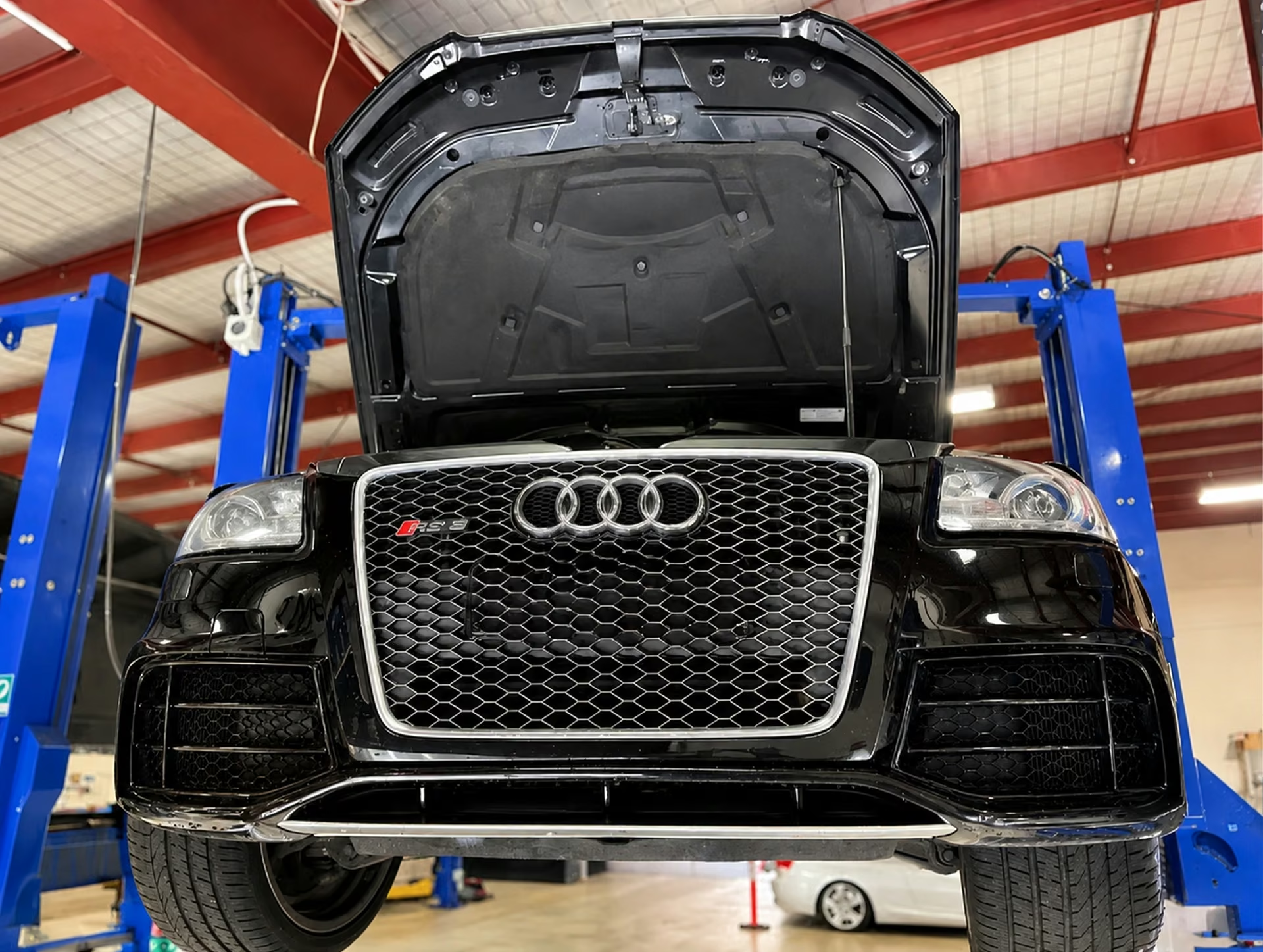
Yes, Audi vehicles generally cost more to maintain than many mainstream cars because they're built with premium components and advanced technology. However, regular servicing is far more affordable than repairing problems caused by neglected maintenance.
This is especially important as Australians keep their vehicles for longer. According to the Bureau of Infrastructure and Transport Research Economics Statistical Report (2022), the average age of Australia's vehicle fleet is now over 11 years, making preventive maintenance essential to improve reliability and avoid unexpected repair costs.
Factors that influence maintenance costs
- Audi model and engine: Larger, performance or diesel models may require more specialised parts and labour.
- Vehicle age and kilometres: Older or higher-kilometre vehicles may need more wear-related repairs.
- Major service items: Spark plugs, brake fluid, filters and transmission oil are not replaced at every service, but add cost when due.
- Service history: A well-maintained Audi is less likely to need unexpected repairs.
- Diagnostic requirements: Modern Audis often need specialist diagnostic equipment to accurately identify faults.
Looking for trusted Audi specialists in Melbourne?
Get expert care for your Audi from Melbourne's trusted European vehicle specialists.
Audi maintenance schedule and service plan explained
Following your Audi maintenance schedule is one of the best ways to keep your vehicle reliable, safe and performing as intended. While Audi designs its service schedule for everyday driving, Australian conditions can put additional strain on your vehicle.
Frequent stop-start traffic, changing temperatures and short daily trips can accelerate wear on key components, making it even more important to stay on top of scheduled maintenance.
How often should you service your Audi?
Most Audi vehicles should be serviced every 12 months or at 15,000 kilometre intervals, whichever comes first. Some newer models use flexible service reminders based on driving conditions, but these should complement, not replace, the manufacturer's maintenance schedule.
One of the most common issues we see in our workshop is owners delaying servicing because their Audi still feels like it's driving normally. An experienced technician can often identify developing issues before warning lights appear, helping you address minor concerns before they require more extensive repairs.
Where can I find my Audi service schedule?
The easiest place to find your Audi's recommended maintenance schedule is in your owner's manual or through myAudi Australia. Service schedules vary by model, engine type, and model year, so avoid relying on a generic checklist or downloadable PDF.
Whether you service your Audi through a dealership or an independent Audi specialist, following the correct maintenance schedule helps support your vehicle's warranty, maintain resale value and keep servicing predictable over the long term.
What is included in a minor Audi service?
For many Audi models, minor services are typically carried out at intervals of 15,000 km, 45,000 km, or 75,000 km, or every 12 months, depending on your vehicle's service schedule. These services focus on routine maintenance that keeps your Audi operating efficiently between major service intervals.
A minor service or logbook servicing may include:
- Engine oil and filter replacement
- Fluid level checks and top-ups
- Brake, tyre and suspension inspections
- Battery health check
- Diagnostic scan for fault codes
- Service reminder reset
What is included in an Audi major service?
An Audi major service includes more comprehensive maintenance than a minor service because additional time-based or kilometre-based items may be due. These items are not replaced at every visit, which is why major service pricing can be higher than routine servicing.
Depending on your Audi model, engine and service schedule, a major service may include:
- Air filter replacement
- Dust and pollen filter replacement
- Brake fluid replacement
- Spark plug replacement on TFSI petrol models
- Fuel filter replacement on applicable TDI diesel models
- S-tronic gearbox oil change where scheduled
- Haldex coupling oil change on applicable quattro models
- Cooling system, belts and hose inspections
- Software and diagnostic checks where required
For example, Audi Australia’s MY23 guide lists dust and pollen filter replacement at 30,000 km or 24 months; spark plug replacement for TFSI models at 60,000 km or 72 months; brake fluid replacement every 24 months; and S-tronic gearbox oil changes at model-specific intervals.
Additional repairs may also be recommended if the technician finds worn brakes, tyres, batteries, suspension components or leaks during inspection. These are based on vehicle condition, not simply the scheduled service interval.
Does servicing with an independent Audi specialist affect your warranty?
Servicing your Audi with a qualified independent specialist does not automatically void your manufacturer's warranty, provided the service follows Audi's requirements and uses parts, fluids and procedures that meet the manufacturer's specifications.
The Australian Competition and Consumer Commission (ACCC) also advises that consumers are generally not required to use a dealership for servicing to maintain their warranty. Instead, servicing must be carried out by a qualified technician using appropriate parts and methods that meet the manufacturer's standards.
Specialist Audi servicing in Melbourne
Keep your Audi performing at its best with servicing, diagnostics and repairs from technicians who specialise in European vehicles.
Audi servicing and repairs
From routine maintenance to complex diagnostics and repairs, our experienced technicians provide tailored care for Audi vehicles using specialist equipment and manufacturer-approved procedures.

Common Audi repairs and maintenance issues
Audi vehicles are engineered for long-term performance, but like any premium German car, they require regular maintenance to stay reliable. Whether you own an Audi A3, Q5, Q7 or e-tron, recognising common maintenance issues early can help you avoid more expensive repairs and enjoy a better Audi ownership experience.

Oil leaks and fluid leaks
As Audi vehicles age, seals, gaskets, and hoses can begin to wear out, leading to oil or coolant leaks. While some leaks are minor, delaying a fix can affect engine performance or cause additional damage over time.

Engine performance and ignition issues
Rough idling, reduced power or poor fuel economy can often be traced to worn spark plugs, ignition coils or blocked filters. Using quality fluids and genuine Audi parts or OEM-quality alternatives helps maintain the performance Audi engineering is known for.

Suspension, brakes and tyre wear
Australian roads, speed humps and daily driving can place extra stress on suspension components, brakes and tyres. Unusual noises, vibrations or uneven tyre wear shouldn't be ignored, as they may indicate worn parts that require attention.

Battery, software and electrical faults
A weak battery, outdated software updates or an electrical fault can trigger warning lights or affect vehicle performance. Audi-specific diagnostic equipment helps technicians accurately identify the cause before replacing parts unnecessarily.
Before your next Audi service
A little preparation before your next service can help you better understand your Audi's maintenance needs and make informed decisions about any recommended work.
Before booking your service, check:
- Your current mileage: Compare your odometer with your Audi's recommended service schedule to see whether you're approaching a routine or major service.
- Your service history: Review your logbook or service records to see when items such as brake fluid, spark plugs, transmission servicing or filters were last replaced.
- Time-based maintenance: Some maintenance items are based on time rather than kilometres.
- Warning lights or changes in performance: Make a note of any warning lights, unusual noises, vibrations or changes in how your Audi drives so your technician can investigate them during the service.
Can you perform DIY maintenance on your Audi?
Yes, but only for basic maintenance tasks. Owners can safely check tyre pressures, monitor engine oil and coolant levels, top up washer fluid and replace wiper blades between scheduled services. These simple checks can help keep your Audi in good condition and alert you to potential issues early.
For more complex maintenance, it's best to leave the work to a qualified Audi technician. Modern Audi vehicles rely on advanced electronics, specialised systems and manufacturer-specific servicing procedures that require the right tools and expertise. Attempting repairs without the proper knowledge can lead to incorrect diagnosis or more costly repairs.
Choosing the right Audi specialist
After understanding Audi maintenance, the next step is choosing the right workshop. Modern Audi vehicles require specialist knowledge, correct servicing procedures and the right diagnostic equipment to maintain performance, reliability and long-term value.
When comparing Audi service centres, look for:
- Technicians who regularly service Audi vehicles
- Audi-specific diagnostic equipment and software
- Transparent quotes before any work begins
- Genuine or OEM-quality replacement parts
- Clear communication about required and optional work
- Experience with European vehicle servicing and repairs
The right European car specialist should help you understand your Audi's condition, not pressure you into unnecessary work.
Why choose BM Tech for Audi servicing?
BM Tech is an independent European vehicle specialist based in Canterbury, servicing Audi, BMW, MINI and Volkswagen vehicles. Established in 1987, our team provides dealership-level expertise with a more personal and transparent service experience.

Audi specialists
BM Tech works exclusively on selected European brands, including Audi, BMW, MINI and Volkswagen, giving our technicians deep brand-specific knowledge.

Transparent advice
No work is completed without customer approval. You’ll receive clear recommendations, honest communication and a Service Advisor to guide you through the process.

Advanced diagnostics
Our workshop uses manufacturer-level diagnostic equipment to identify faults accurately and support complex Audi servicing and repairs.

Long-term vehicle care
We focus on preventative maintenance, OEM or genuine-quality parts, and servicing that supports performance, warranty requirements and long-term reliability.
Frequently asked questions
How much does it cost to service an Audi in Australia?
Audi service costs vary depending on the model, age, kilometres, service history and whether minor or major service items are due. A major service typically costs more because additional items, such as brake fluid, filters, spark plugs, or transmission servicing, may be required.
Why do modern Audi vehicles need specialist diagnostics?
Modern Audis rely on advanced electronic systems, sensors and control modules. Specialist diagnostic equipment helps technicians read Audi-specific fault codes, identify the root cause of issues and avoid unnecessary part replacement.
Why do service schedules differ between Audi models?
Audi service schedules differ because each model, engine and drivetrain has different maintenance requirements. For example, petrol, diesel, quattro, S tronic and e-tron models may have different service items and intervals.
Protect your Audi for the road ahead
Book with BM Tech for specialist Audi servicing, transparent advice and expert care tailored to your vehicle.
Table of contents