
Key Takeaways
- Australia's Right to Repair laws give EV owners more choice over where they service and repair their vehicles.
- Using a qualified independent repairer won't automatically void your manufacturer's warranty.
- EVs require specialised tools, high-voltage training and manufacturer-approved repair procedures.
- Choosing an experienced EV specialist helps protect your vehicle, warranty and long-term ownership experience.
What is the Right to Repair?
As electric vehicles become more common on Australian roads, many owners are asking whether they have to return to the dealership for every service or repair. Australia's Right to Repair framework gives consumers greater freedom to choose where their vehicle is maintained while ensuring that eligible independent repairers have access to the information needed to perform repairs safely and correctly.
For vehicle owners, this means more choice, increased competition and greater access to qualified repairers without compromising on quality. While some repairs still require specialised tools or manufacturer-specific procedures, Right to Repair helps create a fairer servicing environment for both motorists and independent workshops.
Keep your EV or hybrid car performing at its best
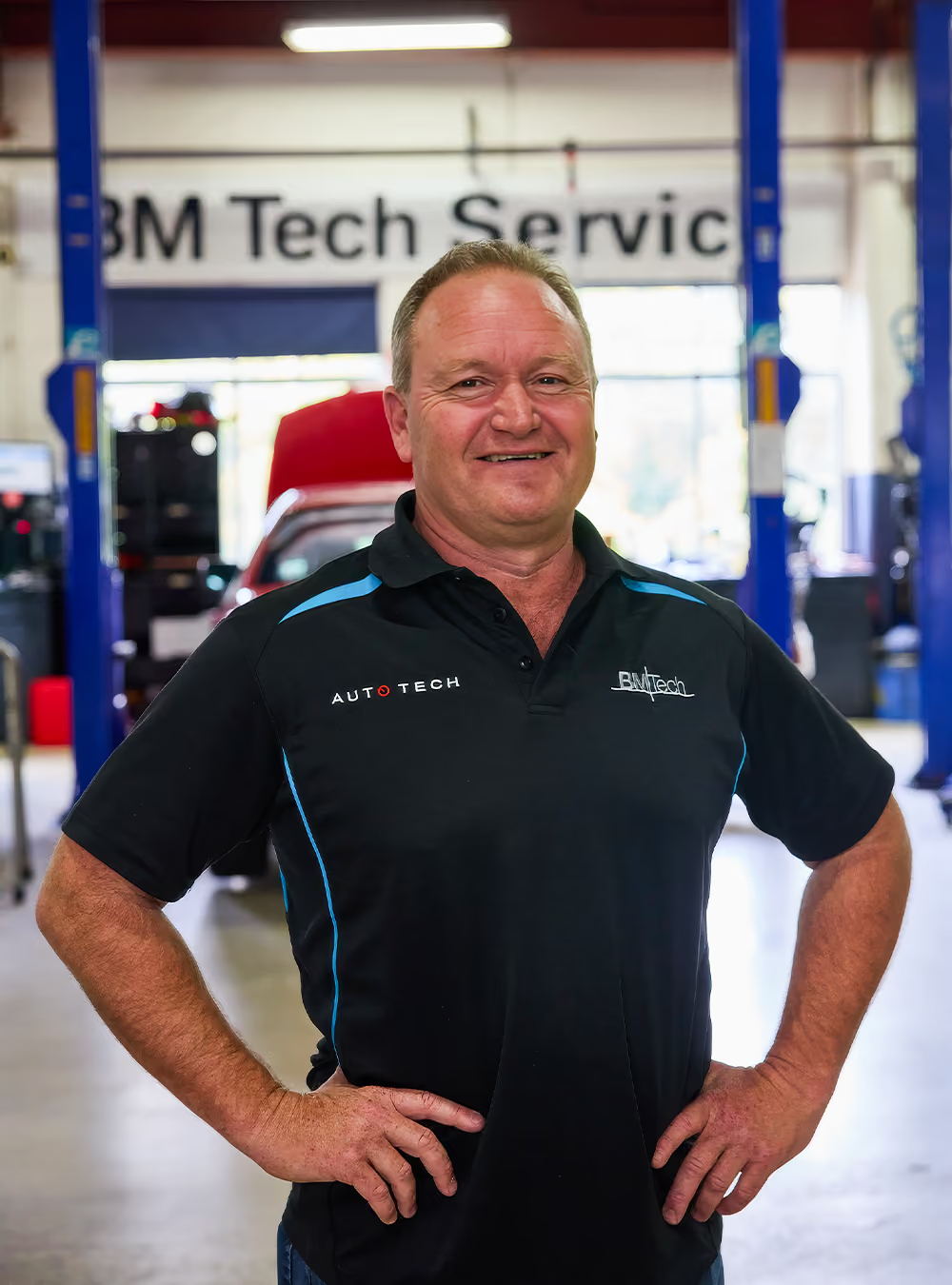
Regular servicing helps identify issues early and keeps your EV operating safely and efficiently. BM Tech's experienced technicians use advanced diagnostic equipment and follow manufacturer-approved repair procedures for European electric vehicles.
What does Right to Repair mean for EV owners?
Electric vehicles are becoming an increasingly common sight on Australian roads. According to the Federal Chamber of Automotive Industries (FCAI), one in five new cars sold is electric or a battery electric vehicle (BEV), with EV market share continuing to grow across Australia. As more drivers switch to electric vehicles, understanding your servicing options and repair rights is more important than ever.
For EV owners, Right to Repair means having greater choice over where and how their vehicle is serviced. Through the Motor Vehicle Information Scheme (MVIS), administered by the Australian Competition and Consumer Commission (ACCC), eligible independent repairers can access manufacturer service and repair information needed to diagnose and maintain modern vehicles using the correct procedures.
More choice for servicing and repairs
Right to Repair gives EV owners the flexibility to choose between authorised dealerships and eligible independent repairers for many servicing and repair tasks. This allows you to select a workshop based on experience, convenience and customer service rather than being limited to a single repair network.
Independent repairers can access manufacturer information
Under the MVIS, participating manufacturers must provide eligible repairers with access to service manuals, wiring diagrams, diagnostic information and repair procedures. This helps independent workshops accurately diagnose faults, follow manufacturer-approved repair methods and provide a wider range of servicing options for EV owners.
Your consumer rights remain protected
Australia's Right to Repair framework works alongside the Australian Consumer Law, which provides important consumer guarantees when purchasing and servicing a vehicle.
These protections continue to apply when your EV is serviced by a qualified independent repairer, provided the work is completed correctly and in accordance with the manufacturer's requirements.
The scheme itself is established under the Competition and Consumer Act 2010, helping promote fair competition and greater choice for Australian motorists.
Should you buy an EV? An Honest Australian Ownership Guide
Thinking about switching to an electric vehicle? Explore the real costs, maintenance requirements, charging considerations and everyday ownership experience to help decide whether an EV is right for you.
Can you service your EV without voiding the warranty?
One of the biggest misconceptions about electric vehicle ownership is that servicing your EV outside the dealership will automatically void the manufacturer's warranty. In Australia, that's generally not the case.
As long as your vehicle is serviced by a qualified repairer using the correct procedures and appropriate parts, you can choose where your EV is maintained while maintaining your warranty obligations.
Understand your manufacturer's warranty requirements
Every manufacturer sets its own warranty terms, including coverage for the vehicle, high-voltage battery and, in some cases, the charger supplied with the vehicle. Following the recommended service schedule and having repairs completed according to the manufacturer's specifications helps ensure your warranty remains valid.
Independent servicing and Australian Consumer Law
Australia's Right to Repair framework requires that information be available to independent repairers, giving eligible workshops access to service manuals, diagnostic procedures, and technical information needed to carry out professional automotive repair and maintenance.
The Electric Vehicle Council also supports improving access to repair information and developing the specialist skills needed to service Australia's growing EV fleet, helping encourage greater competition and consumer choice across the industry.
When genuine parts and manufacturer procedures matter
Some repairs require OEM (Original Equipment Manufacturer) parts or components that meet OEM specifications to ensure safety, reliability and compatibility with the vehicle.
Modern EVs are highly software-driven, so following manufacturer repair procedures and calibration requirements is equally important, particularly when working on battery systems, advanced driver assistance technologies or charging components.
As EV technology continues to accelerate, manufacturers (OEMs) are introducing new software, battery designs and vehicle platforms more frequently than ever. Choosing a repairer with the right training, diagnostic equipment, and access to manufacturer information helps ensure repairs are completed correctly, and your vehicle continues to perform as intended.
What repairs can independent EV specialists perform?
- Routine servicing and maintenance
- Diagnostics and fault finding
- Brake, suspension and steering repairs
- Cooling system servicing
- High-voltage battery and electrical systems
- Software updates and manufacturer-specific procedures

Routine servicing and maintenance
Regular inspections, cabin air filter replacement, brake servicing, tyre rotations, suspension checks and software health checks help keep your EV operating safely and efficiently.
Diagnostics and fault finding
Using dealer-level diagnostic equipment, qualified technicians can identify electrical faults, battery management issues, electric vehicle charging system errors and software-related problems before recommending the appropriate repair.

Brake, suspension and steering repairs
Although EVs have fewer moving drivetrain components than petrol vehicles, their brakes, suspension and steering systems still require routine maintenance and repairs to maintain safety and handling.

Cooling system servicing
Many electric vehicles use liquid cooling systems to regulate battery and powertrain temperatures. Regular inspections help ensure these systems continue operating efficiently and protect critical components.
High-voltage battery and electrical systems
Only technicians with the appropriate high-voltage training should inspect or repair battery systems and related electrical components. These systems require specialised safety procedures, tools and expertise.

Software updates and manufacturer-specific procedures
Modern EVs rely heavily on software to manage battery performance, charging, safety systems and vehicle operation. Qualified workshops with access to manufacturer information and compatible diagnostic tools can perform many software-related procedures, while some updates may still need to be completed through the vehicle manufacturer or authorised dealer.
Why EV repairs are different from petrol and diesel vehicles
Although electric vehicles have fewer moving parts than petrol and diesel cars, they introduce new technologies that require specialised knowledge and equipment. Modern EVs are increasingly software-defined, combining advanced electronics, high-voltage systems, and sophisticated diagnostics that differ significantly from those of traditional vehicles. As a result, many repairs require technicians with EV-specific training and access to manufacturer repair information.
While EVs generally require less routine maintenance, components such as batteries, charging systems, and driver-assistance technologies still require expert attention. Whether you drive a plug-in hybrid or a fully electric vehicle, choosing technicians who understand the latest EV technologies is essential.
How to choose an EV repairer
Not every workshop is equipped to service electric vehicles. As the growing number of EVs on Australian roads continues to increase, choosing a repairer with the right qualifications, equipment and experience can help protect your vehicle's performance and long-term reliability.
Look for EV-qualified technicians
Repairs involving high voltage systems should only be carried out by technicians with specialist training. Experience with European brands and modern EV technology can also make diagnosing faults more efficient.
Confirm access to manufacturer information
Eligible independent workshops can access vehicle service and repair information made available under Australia's Right to Repair framework. This includes service procedures, wiring diagrams and technical documentation that help ensure repairs follow manufacturer requirements.
Ask about diagnostic equipment and software
Modern EVs rely on advanced software to manage battery performance, ADAS, charging and safety systems. Your repairer should have dealer-level diagnostic equipment capable of communicating with your vehicle and performing manufacturer-approved procedures.
Choose a workshop with proven EV experience
Whether you own a Volkswagen, BMW, MINI, Audi, Volvo, or another European EV, look for a workshop experienced in servicing your brand. Specialist knowledge can improve repair accuracy and reduce unnecessary replacement of parts.
What BM Tech offers EV owners
European electric vehicles deserve specialist care backed by the right tools, training and experience. BM Tech combines decades of experience servicing European vehicles with advanced diagnostic capabilities to help keep your EV performing at its best.

Dealer-level diagnostics for European EVs
Our technicians use advanced diagnostic equipment to accurately identify software faults, battery management issues, and electrical problems, helping reduce unnecessary repairs and downtime.
Experienced European vehicle specialists
From BMW and MINI to Audi and Volkswagen, we understand the engineering behind Europe's leading EVs and follow manufacturer-approved repair procedures wherever applicable.

Transparent advice and tailored repair solutions
Whether you need routine servicing, diagnostics or more complex car repairs, we'll explain our findings clearly and recommend the most appropriate solution based on your vehicle's condition and your driving needs.
Supporting your long-term EV ownership
We're committed to helping Australian EV owners maintain performance, maximise battery life and make informed servicing decisions through honest advice and preventative maintenance.
Frequently asked questions
Can I take my EV to any mechanic for servicing?
Not every workshop is equipped to service electric vehicles. EVs contain high-voltage electrical systems that require specialised training, diagnostic equipment and manufacturer-approved repair procedures. Choosing a qualified EV repairer helps ensure your vehicle is serviced safely and in accordance with the manufacturer's requirements.
Are EV batteries repairable, or do they always need replacing?
Not always. In many cases, technicians can diagnose and repair faults affecting battery management systems, cooling systems or individual components without replacing the entire battery pack. Whether a repair or replacement is needed depends on the nature of the fault, the battery's condition and the manufacturer's recommendations.
Do electric vehicles require less maintenance than petrol cars?
Generally, yes. EVs don't require engine oil changes and have fewer moving drivetrain components, which can reduce the need for routine maintenance. However, they still require regular servicing to inspect brakes, tyres, suspension, battery health, charging systems and software to ensure the vehicle continues to operate safely and efficiently.
What happens if companies fail to comply with Right to Repair requirements?
Manufacturers that fail to meet their obligations under the Motor Vehicle Information Scheme (MVIS) may face enforcement action by the Australian Competition and Consumer Commission (ACCC), including infringement notices, financial penalties or court proceedings. If you believe your repair rights have been unfairly restricted, you can also seek advice from the ACCC or your state or territory consumer protection agency.
Book your EV service or inspection
Book your European EV service or inspection with BM Tech and receive expert advice from experienced technicians, backed by dealer-level diagnostics.
Table of contents