

Key Takeaways
- Electric vehicles can offer lower running costs and fewer routine maintenance requirements, but they're not the right choice for every Australian driver.
- Before buying an EV, compare the total cost of ownership, charging options, servicing requirements and battery warranty—not just the purchase price.
- Choosing the right model and maintaining it according to the manufacturer's recommendations will help you get the best performance, reliability and long-term value from your investment.
Should you buy an electric vehicle?
Electric vehicles (EVs) are becoming an increasingly common sight on Australian roads. With more manufacturers introducing new models and public charging infrastructure continuing to expand, many drivers are wondering whether now is the right time to buy an electric vehicle.
At BM Tech, we believe there isn't a one-size-fits-all answer. For some Australians, an EV can be an excellent investment. For others, a hybrid or even a modern petrol vehicle may still be the better choice. This guide explores the benefits, costs and practical considerations of owning an EV so you can make an informed decision.
Talk to our electric and hybrid specialists
Thinking about buying your first EV or hybrid? Our team provides honest advice, specialist servicing and dealer-level diagnostics for European electric and hybrid vehicles.
What are the main benefits of switching to an electric vehicle?
While an EV isn't the right choice for everyone, understanding these benefits can help you decide whether switching is right for your driving habits and long-term ownership goals.
- Lower day-to-day running costs
- Fewer routine maintenance requirements
- Smooth, quiet and responsive driving
- Reduced tailpipe emissions
- Government incentives

Lower day-to-day running costs
One of the biggest advantages of owning an EV is the potential to reduce everyday running costs. Electricity is generally cheaper than petrol or diesel on a per-kilometre basis, particularly if you charge at home during off-peak electricity tariff periods or use rooftop solar.
Savings vary depending on how much you drive, local electricity prices and where you charge. Public fast chargers offer convenience but usually cost more than home charging, so it's worth considering your typical driving routine before deciding whether an EV will cost less to run than your current vehicle.

Fewer routine maintenance requirements
Unlike an internal combustion engine (ICE) vehicle, an EV doesn't require engine oil changes, spark plugs, timing belts or exhaust system servicing. With fewer moving parts, routine maintenance is often simpler.
However, that doesn't mean electric vehicles are maintenance-free. They still require regular servicing to inspect tyres, brakes, suspension, cabin filters, cooling systems, software and the vehicle's electrical systems. Preventative maintenance remains essential for safety, reliability and protecting your investment.

Smooth, quiet and responsive driving
Electric motors deliver instant torque, allowing most EVs to accelerate smoothly from a standstill. Without gear changes or engine vibration, many drivers find driving an EV quieter and more refined than a comparable petrol vehicle.
Whether you're commuting through Melbourne traffic or driving on the open road, the responsive nature of an electric powertrain contributes to a relaxed and comfortable driving experience.

Reduced tailpipe emissions
Battery electric vehicles produce zero tailpipe emissions while driving, helping improve local air quality and reduce dependence on fossil fuels. For many Australians, lowering everyday emissions is one of the main motivations for switching to an EV.
However, environmental impact involves more than what comes out of the tailpipe. Battery production, electricity generation, and recycling also play important roles. We'll explore these considerations later in this guide.

Government incentives for EV cars
Did you know you can take advantage of government incentives for new cars, specifically electric vehicles? Before your big purchase, check eligibility for various financing options for new EVs.
- Electric Car Discount – Eligible battery electric, hydrogen fuel cell and some plug-in hybrid vehicles may qualify for Fringe Benefits Tax (FBT) exemptions through eligible employers.
- Clean Energy Finance Corporation (CEFC) funding – The CEFC supports financing initiatives that can improve access to eligible electric vehicles and charging infrastructure through participating lenders and programs.
- New Vehicle Efficiency Standard (NVES) – Introduced to encourage manufacturers to supply lower-emission vehicles to Australia, the NVES is expected to increase the availability of EVs and improve model choice over time.
Government support and eligibility criteria can change, so it's worth checking the Australian Government's latest guidance before purchasing your next car.
What should you consider before buying your first EV?
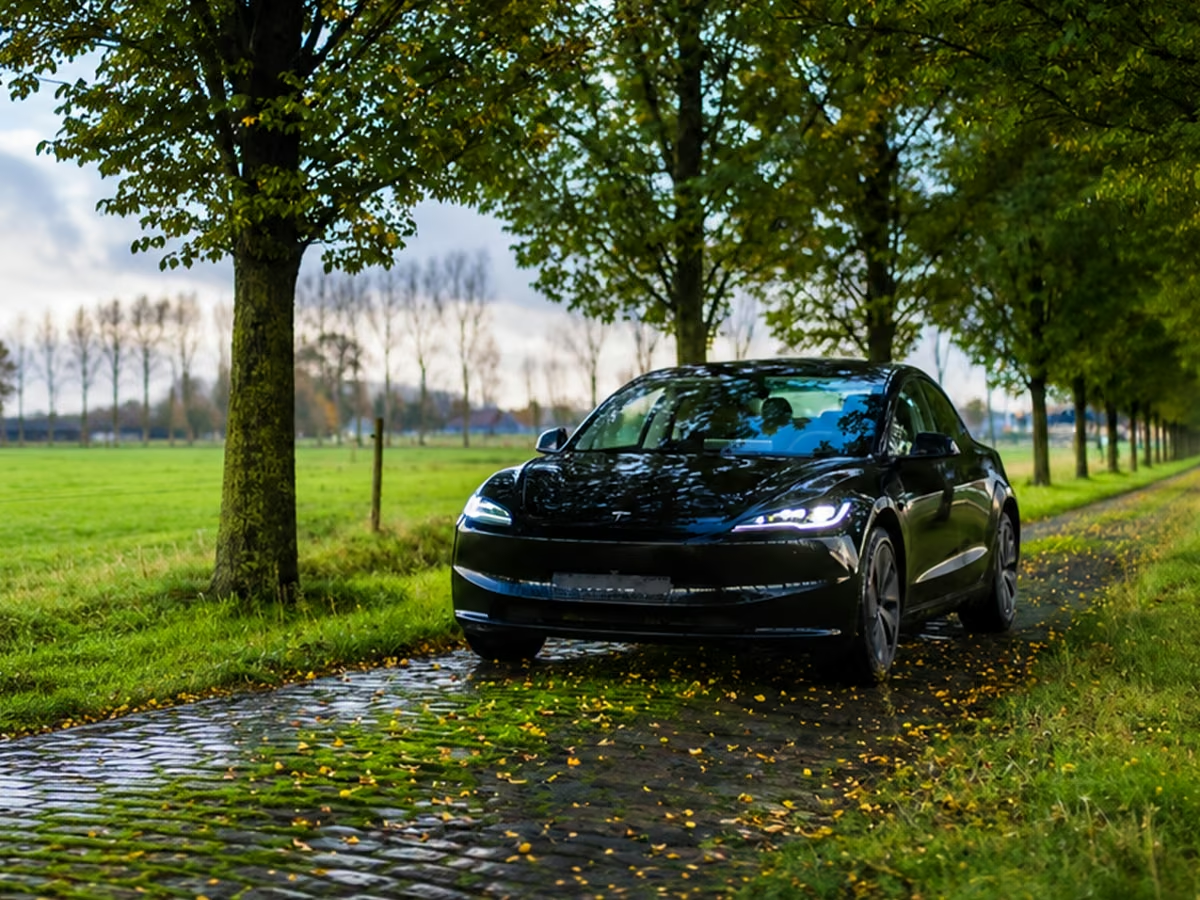
Buying your first electric vehicle is about more than choosing a model with the longest range. Before making the switch, consider how you'll charge it, how you typically drive and whether an EV suits your lifestyle and budget.
Can you charge at home?
For many owners, the biggest convenience of an EV is the ability to charge at home overnight. If you have off-street parking, installing a dedicated charger can make electric vehicle ownership easier and reduce charging costs with suitable electricity tariffs.
If you live in an apartment or rely on street parking, charging may require more planning. Before buying an EV, consider whether home charging is practical for your situation.
How far do you typically drive?
Most Australians travel well within the driving range offered by modern EVs during everyday use. If your daily commute is relatively short, you may only need to recharge every few days.
However, if you frequently travel long regional distances or tow heavy loads, it's worth evaluating whether an EV's range and charging availability suit your needs. Choosing the right vehicle starts with understanding how you actually use it.
Is Australia's charging network right for you?
Australia's public charging network continues to expand, with organisations such as the Australian Renewable Energy Agency (ARENA) supporting improvements in charging infrastructure. Even so, charging station availability still varies between metropolitan, regional and remote areas.
If most of your driving is around Melbourne or other major cities, public charging is becoming increasingly accessible. Drivers who regularly travel long distances should take time to research charging locations before committing to an EV.
Are EVs really better for the environment?
Electric vehicles are generally not harmful to the environment. In fact, they are often promoted as the cleaner alternative to traditional vehicles, but the full picture is more complex. While EVs produce no tailpipe emissions during driving, their overall environmental impact depends on how they're built, how they're charged and how long they're kept on the road.
Tailpipe emissions are only part of the story
One of the biggest environmental benefits of an EV is that it produces zero tailpipe emissions while driving. This can improve local air quality, particularly in urban areas where vehicle emissions contribute to pollution. However, it's important to look beyond the exhaust and consider the vehicle's entire lifecycle.
Battery manufacturing has an environmental impact
Manufacturing lithium-ion batteries requires energy and raw materials such as lithium, nickel and cobalt. As a result, building a battery electric vehicle generally creates a larger carbon footprint than manufacturing an equivalent ICE car.
Over time, however, many studies suggest those emissions can be offset through lower operational emissions, particularly as electricity generation becomes cleaner.
Australia's electricity grid continues to evolve
The environmental benefits of running an EV partly depend on where the electricity comes from. According to the Australian Government's Green Vehicle Guide, an EV charged with 100% renewable energy can produce zero emissions during vehicle use, while grid-charging emissions vary depending on how electricity is generated in each state and territory.
As Australia's electricity grid incorporates more renewable energy, the lifecycle emissions associated with EV charging are expected to decrease.
Battery recycling is improving
Battery recycling technology continues to develop as EV adoption increases. Research organisations such as CSIRO are working with industry to improve the recovery of valuable battery materials, reducing waste and supporting a more sustainable lifecycle for electric vehicles.
Common myths about EV ownership
As more Australians begin considering an EV, misinformation continues to circulate online. Here are some of the most common myths, and the reality behind them.
"EVs never need servicing"
False. Although EVs have fewer moving parts than petrol or diesel cars, they still require regular car servicing and maintenance. Tyres, brakes, suspension, cooling systems, cabin filters and software all require routine inspections to ensure safe and reliable operation.
"Charging always takes too long"
Charging time depends on the charger you use. Home charging is ideal for overnight top-ups, while public DC fast chargers can significantly reduce charging times during longer trips. The best option depends on your driving habits rather than a single charging speed.
"EV batteries need replacing every few years"
Modern EV batteries are designed to last much longer than many people expect. Most manufacturers back their batteries with warranties of around eight years, and real-world experience shows many continue performing well beyond that period. Replacing the battery should not be viewed as a routine ownership cost.
"Electric cars are always better and cheaper"
Not necessarily. An EV may be better and cheaper for some drivers, particularly those who commute daily and can charge at home. For others, factors such as purchase price, insurance, regional travel or limited charging access may mean another vehicle is the better fit. The best choice is the one that matches your lifestyle, not simply the latest trend.
Is an EV a good investment?
Is it time to buy an EV? Whether an EV is a good investment depends on more than its purchase price. While EVs cost more than a comparable new or old petrol car, they may offer lower running costs over time. The right choice depends on how you drive, where you charge and how long you plan to keep your next car.
When an EV makes financial sense
An EV can be a worthwhile investment if you drive regularly, have access to home charging and plan to own the vehicle for several years. Lower energy costs and fewer routine servicing requirements may offset the higher base price, particularly for commuters who cover consistent daily distances.
When a petrol, diesel or hybrid vehicle may suit you better
An EV isn't always the best option. If you regularly tow heavy loads, travel long regional distances or don't have reliable charging access, a hybrid, petrol or diesel car may better suit your lifestyle. Buyers should compare the total cost of ownership rather than focusing solely on purchase price or fuel savings.
EV buying guide: 5 steps to choosing the right model
Choosing an EV isn't simply about buying the newest model or the one with the longest driving range. Taking the time to compare how you'll use the vehicle, what it will cost to own and how it will be maintained can help you make a more confident purchase.
- 01
Choose the right type of electric vehicle
One of the first decisions is deciding which type of electrified vehicle best suits your lifestyle. A battery electric vehicle (BEV) runs entirely on electricity, making it ideal for drivers with convenient charging access.
Plug-in hybrid electric vehicles (PHEVs) combine an electric motor with a petrol engine, offering additional flexibility for longer trips, while hybrid electric vehicles (HEVs) recharge themselves during driving without being plugged in. Understanding how each system works will help narrow your options before comparing individual models.
- 02
Compare the long-term running costs
The purchase price tells only part of the story. Before choosing a model, compare its expected running costs over several years. Consider how much you'll spend on charging, insurance, scheduled servicing and maintenance, and expected depreciation.
Some EVs have a higher upfront cost but lower ownership expenses, while others may be more expensive to insure or operate, depending on your driving habits.
- 03
Understand the servicing requirements
Although electric vehicles eliminate many engine-related maintenance items, they still require regular servicing. Tyres, brakes, suspension, cooling systems, cabin filters and software all need periodic attention to maintain safety and performance.
Before purchasing an EV, ask about the manufacturer's service schedule, battery warranty and whether qualified technicians are available to service the vehicle where you live.
- 04
Look beyond the advertised driving range
Driving range is important, but it shouldn't be the only deciding factor. Consider how quickly the vehicle can recharge, whether it supports DC fast charging and how easily you'll be able to access charging stations during longer trips. For many Australians, choosing an EV that matches their typical driving routine is more practical than simply selecting the model with the highest claimed range.
- 05
Test drive before making your final decision
Specifications only tell part of the story. A test drive allows you to compare ride comfort, visibility, regenerative braking, cabin technology and overall driving experience across different models. If you're buying a used EV, it's also worth checking the service history, remaining battery warranty and overall condition before signing the contract.
EV ownership tips: Keeping your electric vehicle in top condition
Owning an EV is generally simpler than owning a conventional petrol or diesel vehicle, but regular maintenance is still essential. According to the Australian Government, EVs have fewer moving parts and typically require less maintenance, yet they still benefit from scheduled inspections to ensure they remain safe, efficient and reliable.
Follow your manufacturer's servicing schedule
Don't assume your EV is maintenance-free. Regular servicing helps identify wear before it becomes a problem and ensures that important systems continue to operate as intended. Always follow your owner's manual for recommended service intervals, battery care and software updates.
Look after the battery and charging system
The high-voltage battery is the heart of your EV, so following the manufacturer's charging recommendations is essential. While frequent DC fast charging should generally be reserved for longer trips, battery charging advice varies by model.
Some manufacturers recommend keeping the battery between 20% and 80% for everyday use, while others advise charging to 100% once a week to help maintain battery health and calibration.
Don't overlook tyres, brakes and cooling systems
Although EVs eliminate engine oil changes and many traditional maintenance items, tyres, brakes, suspension and battery cooling systems still require regular inspection. Regenerative braking can reduce brake wear, but brake fluid, calipers and other components should continue to be serviced at the recommended intervals.
EV-specific tyres should also be checked regularly, as the additional battery weight and instant torque can increase tyre wear.
Keep software and safety systems up to date
Modern EVs rely heavily on onboard computers to monitor battery health, optimise performance and manage driver assistance features. Installing software updates and responding to maintenance alerts helps keep your vehicle operating safely and efficiently throughout its life.
When comparing servicing options, remember that right to repair regulations provide you with the freedom to choose where your vehicle is serviced and repaired, supporting greater competition and transparency in the automotive market.
The future of EV ownership in Australia
The future of EV ownership looks promising as new cars continue to offer longer miles of range, battery technology improves and charging infrastructure expands across Australia. While concerns about charging availability and rising EV demand remain, government and industry investment are helping address these challenges.
For Australians getting an EV, the long-term outlook is increasingly positive—but choosing the right model, understanding ownership costs and following the recommended maintenance schedule will remain just as important as the technology itself.
Why European car owners choose specialists
Whether you drive a petrol, hybrid or fully electric European vehicle, specialist servicing helps protect performance, reliability and long-term ownership. Learn why choosing the right workshop matters.
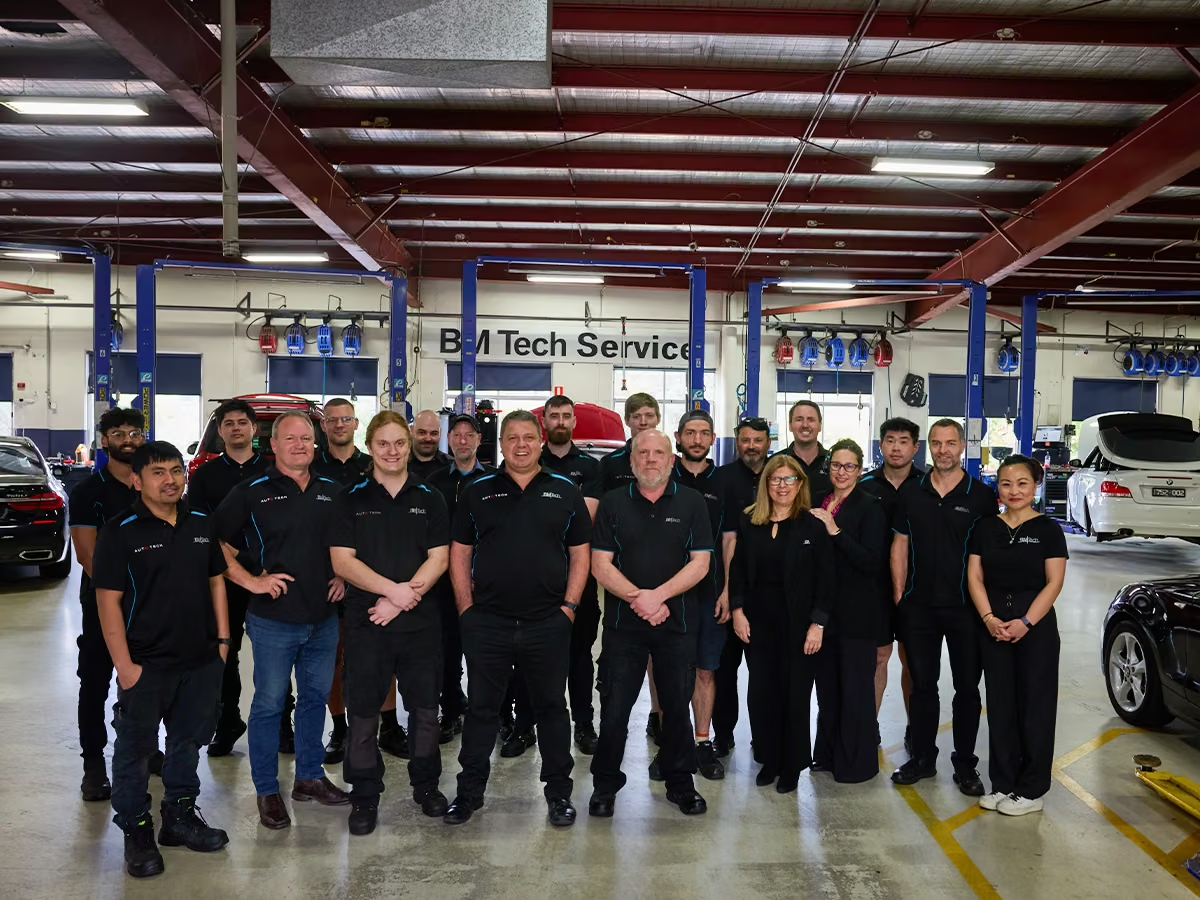
Why choose BM Tech for electric and hybrid servicing?
Electric and hybrid vehicles are evolving rapidly. Our team combines specialist European expertise with ongoing technical training, dealer-level diagnostics and a preventative approach to help keep your vehicle performing at its best.
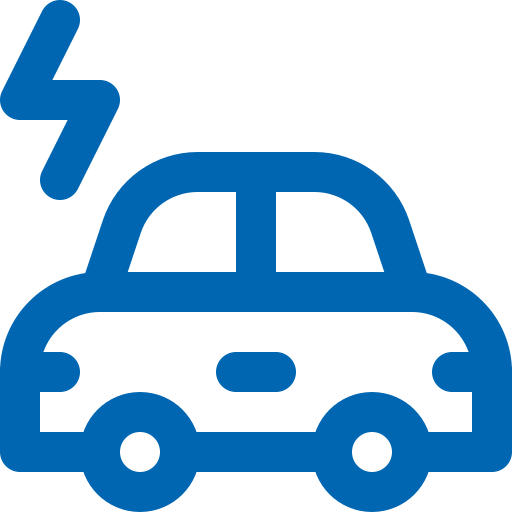
Specialists in European electric and hybrid vehicles
We specialise in servicing BMW, MINI, Audi and Volkswagen electric and hybrid models. Our technicians understand the engineering and maintenance requirements unique to European vehicles.
Continuously trained in evolving EV technology
Electric vehicle technology continues to advance, and so do we. Our technicians undertake ongoing manufacturer and industry training to stay current with new systems, battery technologies and servicing procedures, ensuring your vehicle receives informed, up-to-date care.

Dealer-level diagnostics and preventative maintenance
Using dealer-level diagnostic equipment, we assess battery health, electronic systems and vehicle performance while identifying potential issues before they become costly repairs.

Honest advice tailored to your driving needs
Whether you're buying your first EV, maintaining your current vehicle or planning your next upgrade, we'll provide practical recommendations based on your driving habits and long-term ownership goals—not sales targets.
Frequently asked questions
Is electric car insurance more expensive?
Insurance premiums vary depending on the make, model, driver profile and insurer. Some EVs can cost more to insure because of their higher purchase price and specialised repair requirements, while others are comparable to similar petrol vehicles. Comparing quotes before you buy is the best way to understand your expected ownership costs.
How much does it cost to charge an EV at home?
The cost depends on your electricity tariff, battery size and how much you drive. Charging overnight on an off-peak tariff is often the most economical option. Many owners also reduce charging costs by using rooftop solar where available.
What type of charger should I install at home?
Most EV owners use either a standard power outlet for occasional charging or a dedicated AC wall charger for faster, more convenient charging. The right option depends on your vehicle, daily driving distance and home electrical setup. A licensed electrician can recommend the most suitable installation for your needs.
Are electric vehicles harder to drive than the average car?
No. Most drivers adapt to an EV very quickly. The absence of gear changes and the smooth delivery of power often make them easier to drive in everyday traffic. The biggest adjustment is learning regenerative braking, which slows the vehicle when you lift off the accelerator and can help improve driving efficiency.
Thinking about buying or servicing an EV?
Get expert advice and specialist servicing for your European electric or hybrid vehicle from the team at BM Tech.
Table of contents